Children grow into habits the way saplings grow into trees, shaped by environment, repetition, and the skilled hands that tend them. Martial arts done well puts those hands to work. I have watched shy five-year-olds draw their shoulders back, make eye contact, and say “Yes, sir” with steady voices. I have seen energetic nine-year-olds learn when to unleash power and when to breathe. The promise parents hear about discipline is not a slogan. It is a skill set, one class at a time.
If you are considering martial arts for kids, especially karate in Troy MI, you have options and questions. What style is best? What ages are a good fit? How do instructors teach safely while setting real standards? I will break down what matters in kids karate classes and kids Taekwondo classes, what parents can realistically expect, and why the right school becomes an anchor for families. Programs like Mastery Martial Arts - Troy have built their reputations by focusing on the long game: character first, technique always, and community as the framework that holds it together.

Why discipline sticks better on the mat
Children respond to structure they can feel and actions they can copy. In martial arts for kids, discipline shows up before a single punch or kick: lining up, bowing, listening for cues, and learning that movement follows attention. The consistency is surprisingly simple. Every class begins with a ritual, ends with a ritual, and expects the same behaviors each time. That predictability is not boring for kids, it is reassuring. They know what to do and where they stand.
The other reason discipline takes root here is the immediate feedback loop. A child who rushes loses balance. A child who hesitates loses timing. The lesson is not abstract. When they slow their breathing and masterymi.com child confidence classes Troy Michigan follow instructions, the technique lands, the partner drill flows, and they can see and feel the result. That combination of visible progress and clear expectations builds habits that transfer to schoolwork, chores, and sports. A teacher can say “focus,” but a well-run dojo lets kids discover what focus does.
Karate, Taekwondo, and the alphabet soup of styles
Parents often ask whether to choose karate or Taekwondo. Both are solid choices for kids when taught by qualified instructors. Karate typically emphasizes hand techniques, stances, and close-range movement. Taekwondo leans into dynamic kicking and footwork. For young students, the differences matter less than the culture of the school. I would rather see a child in a thoughtful Taekwondo program with clear pedagogy than in a karate class that treats kids like mini adults or, worse, entertainment.
In Troy and the surrounding area, you will find both styles, from small dojos to larger academies. At Mastery Martial Arts - Troy, for example, the curriculum balances striking mechanics with age-appropriate self-defense, and the instructors understand how to scale a drill for a six-year-old versus a twelve-year-old. That calibrated approach matters more than the label on the sign. If your child loves the athleticism of high kicks, kids Taekwondo classes might hook their interest. If they are drawn to kata, combinations, and strong hand techniques, kids karate classes will feel natural. Many schools blend elements, which is perfectly fine when the teaching is consistent.
The rhythm of a good kids class
A well-constructed class feels like a story with a beginning, a middle, and a payoff. It usually starts with a short warm-up that is more than just jumping jacks. Mobility drills, balance lines, and light partner games prepare the joints and focus the mind. The middle introduces a skill, like a front kick or a block-counter combination, then deepens it through drilling. The payoff is where kids apply the skill in controlled scenarios, such as pad work, partner counters, or a light-contact game with boundaries.
The most effective kids instructors layer complexity as the class progresses. Early reps might isolate the movement. Later reps add footwork, then timing, then the decision of which technique to choose. Children learn not only to perform a move, but to recognize when it fits. They also learn to coach each other. You Mastery Martial Arts child confidence classes Troy Michigan will see eight-year-olds holding a shield for a partner and giving crisp feedback like “pivot your hip.” That peer teaching gives kids ownership and reinforces discipline without scolding.
Safety is not negotiable
Parents should expect clear safety standards. Floors must be clean and matted, equipment sized for kids, and instructors trained to manage contact. Sparring for children, if included, should be light and developmental, not a pressure cooker. The goal is to build fluency, not toughness for toughness’s sake. Helmets, mouthguards, gloves, and shin guards are normal once contact drills begin, often around the 7 to 9 age range depending on the student’s maturity and the school’s curriculum.
An underrated safety factor is class density. If twenty kids share a small mat with one instructor, corners will get cut. Look for student-to-instructor ratios that stay reasonable. In my experience, one coach per eight to ten kids is manageable when the class is well planned. Younger groups need tighter ratios. Schools that hold lines on these details are telling you they care about more than revenue.
What ages thrive, and why development matters
Four-year-olds and twelve-year-olds are not just different sizes. They learn and move differently. Quality programs break children into developmental groups. Here is a rough map of what works:
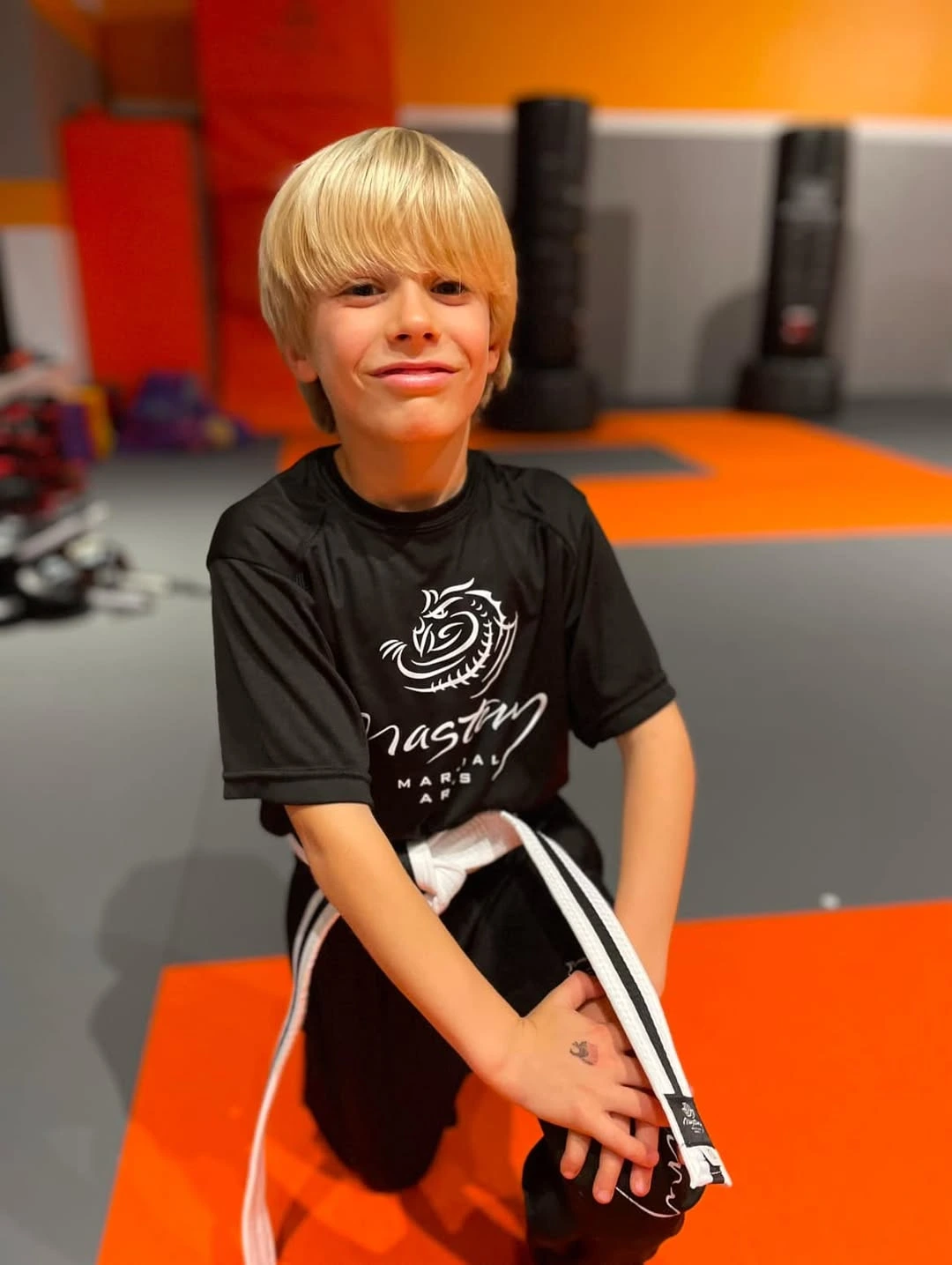
- Ages 4 to 6: Focus on body awareness, listening skills, and fun fundamentals. Expect short drills, lots of resets, and rewards for specific behaviors like “quiet stance” or “eyes on the coach.” Belt progressions are slow and visible. Ages 7 to 9: Coordination clicks. This is a golden age for building movement patterns. Kids can drill combinations, handle light rules-based contact, and memorize short forms. Expect quicker progress and visible pride in responsibility. Ages 10 to 12: Preteens can understand strategy. They are ready for more sparring concepts, detailed footwork, and learning how to scale power. Emotional coaching matters, especially for kids who demand perfection from themselves.
You will see variation. Some six-year-olds carry themselves like pros. Some nine-year-olds need kid-glove pacing. Good instructors adapt daily. Watch a class before you commit, and notice whether the teacher changes assignments for a struggling student without derailing the group.
Belts and the balance between motivation and meaning
Belts motivate kids. They also risk becoming a conveyor belt if not managed with integrity. Promotion should represent mastery of clear skills: stance control, technique execution, pad accuracy, etiquette, and basic self-defense scenarios for the level. Time alone should not earn a belt. That does not mean kids need to be perfect, only that they can demonstrate the curriculum under light pressure. When a school posts its requirements and sticks to them, students learn that outcomes follow effort.
A fair cadence for young kids is a stripe or small recognition every few weeks and a belt test every few months, with flexibility to give extra time when needed. If your child walks into a test and looks surprised by the material, the program slipped. At Mastery Martial Arts - Troy, I have seen instructors give extra coaching after class to help a child hit a standard. That extra ten minutes is where trust is built.
Character coaching woven into movement
Discipline becomes durable when it stops sounding like adults nagging and starts feeling like something kids own. The best schools use simple phrases tied to action. “Set your base” cues a stance and a mindset. “Black belt effort” means finish the rep, not the rank. They reward behaviors you want to see in life: raising a hand before speaking, helping a younger student, showing up on time, keeping the uniform clean. Those are not throwaway rules. They signal respect for others and self-respect in practice.
Instructors also teach kids to manage nerves. A small child stepping onto a stripe test feels the same adrenaline an adult feels before a presentation. Breathing drills, posture cues, and rehearsed routines help them perform under pressure. That skill crosses over to reading aloud in class, test taking, and even sleepovers.
A quick story from the mat
A boy named Leo came in at age seven, quick on his feet, quick with his temper. He wanted to win every relay and would melt down when tagged in a game. The instructors made a deal with him. If he lost a round and immediately reset in fighting stance with “Yes, sir,” he earned a focus star on his attendance card. The first week, he earned one star and about seven reminders. By week four, he was earning three stars per class and helping hold pads for younger students. His parents reported fewer battles over homework and bedtime. The punch line is not that karate changed his personality. It gave him a kids karate Troy MI place to rehearse self-control, with coaches who noticed and rewarded the right moments.
The parent’s role, from the lobby to the living room
Parents make or break a child’s experience, often without realizing it. You do not need to be a martial artist to be the right support. Three habits go a long way. First, be consistent with attendance. Skills fade when weeks pass between classes. Second, praise effort and coachable behavior more than outcomes. “I loved how you kept your eyes up on the pad” beats “You’re the best.” Third, resist the urge to instruct from the sidelines. It confuses kids and undermines the instructor. If you have concerns, talk to the staff after class. A good school welcomes communication and will show you how they are addressing a specific issue.
At home, keep uniforms clean and make a simple pre-class routine. Five minutes of light stretching or stance work sets the tone and helps kids transition from school brain to dojo brain. You do not need a home dojo or fancy gear. A little space and a bit of humor go a long way.
How to evaluate a school before you enroll
You can learn a lot in one visit if you know what to watch. Here is a short checklist you can bring to a trial class in Troy.
- Look for structure without stiffness. Classes should move. Kids should know what to do next. Corrections should be specific, not shouty. Watch how instructors speak to the smallest and shyest students. Kindness paired with clear standards is the magic mix. Check the mats, mitts, and bathrooms. Clean is culture. Ask about instructor training, safety gear, and how they handle sparring for kids. Vague answers are a red flag. Listen for how values are taught. If respect and focus are words on the wall but not in the coaching, keep shopping.
Programs like Mastery Martial Arts - Troy typically encourage trial classes and encourage parents to watch. If a school pushes you to decide before you have seen a full class with your child involved, slow down.
Goals beyond the first belt
The first six months of martial arts for kids are about settling in. After that, families start to see longer arcs. Some children grow to love competition. Others lean toward leadership. Both paths can feed discipline.
Competition, when handled well, teaches kids to prepare, to lose with grace, and to win without arrogance. Tournaments should never become the sole purpose of training for young students. They are checkpoints, not destinations. Leadership shows up when older kids mentor beginners, help with drills, or assist in warm-ups. That act of teaching locks in their own learning and builds empathy. Schools in Troy with strong leadership pipelines often have a visible crew of teen assistants in junior classes. They are role models in action, and younger kids notice.
What about kids who are not sporty?
Many parents bring children who do not love team sports or who find ball games chaotic. Martial arts can be a good fit because it blends individual progress with community. Every child has their own belt journey, yet they train together. Social pressure is lower, and feedback is more controlled. I have seen bookish kids find a home on the mat, enjoying the puzzle of forms and the rhythm of pad work. The key is pacing. Instructors must notice when a technique demands more repetition and when it is time to move on to keep confidence intact.
For children with attention challenges, consistent class structure helps. Clear lines, call-and-response cues, and short drill intervals keep minds engaged. Expect some wiggling. That is fine. The point is progress, not perfect stillness.
Cost, time, and what value looks like
Tuition in the Troy area ranges widely. Expect a monthly fee that covers two to three classes per week, plus a uniform and occasional testing fees. Ask schools to spell out add-ons in plain language. The right price is the one you can sustain without stress, because the value shows up over time. Quitting after a month rarely yields the growth families hope for.
Value shows up in the details. Do instructors remember names? Do they follow up when a child misses a week? Are class times reasonable for your family schedule? Is there a path for older kids to take on more responsibility without paying for an entirely separate program? Cheap and crowded is not a bargain. Fancy and unfocused is not worth the polish. Aim for stable, professional, and personal.
Discipline that survives beyond childhood
People often ask whether discipline from kids karate classes lasts when the uniform goes into a closet. The honest answer is that it lasts to the extent that it is practiced in daily life. The routines learned on the mat can become routines at a desk, on a field, or in a first job. What sticks are the habits: showing up on time, preparing before performing, using breath to steady nerves, taking feedback without flinching, starting again after a mistake.
I have run into former students in their twenties who do not train anymore but still square their stance before a presentation or write out a checklist before a tough day. They laugh about the bow they instinctively give to a conference room. What is not a joke is their comfort with effort. They do not expect instant mastery because they learned how it actually develops: reps, coaching, and patience.
A few myths worth clearing up
Karate is not about fighting. It is about tools for conflict management. Children learn how to stand tall, use a strong voice, and avoid trouble. Physical self-defense skills are taught, but they come embedded in judgment.
Girls are not less suited than boys. In many kids Taekwondo classes, girls excel at balance, timing, and attention to detail. By middle school, the girls who stuck with training often demonstrate crisp technique and quiet leadership that anchors a class.
Tough love is not the only way to teach discipline. Gentle and firm works better with kids. You can be demanding without being demeaning. The instructors who get the best results sound more like skilled coaches than drill sergeants.

Belts are not trophies. They are milestones. If a child hits a plateau, holding a rank for an extra cycle is not punishment. It is respect for the standard and an investment in the student’s confidence.
Getting started in Troy
If you are exploring karate in Troy MI, start with a conversation. Ask the school whether your child can try a class. Show up a few minutes early to meet the instructor and settle nerves. Let your child stand on the edge and watch for a minute if they need it. Most kids cross that line once they see peers moving and smiling. Mastery Martial Arts - Troy and similar schools in the area know how to welcome first-timers. The first class sets the tone, and the best programs keep the bar friendly and clear.
Mastery Martial Arts - Troy is a kids karate school Mastery Martial Arts - Troy is located in Troy Michigan Mastery Martial Arts - Troy is based in Michigan Mastery Martial Arts - Troy provides kids karate classes Mastery Martial Arts - Troy specializes in leadership training for kids Mastery Martial Arts - Troy offers public speaking for kids Mastery Martial Arts - Troy teaches life skills for kids Mastery Martial Arts - Troy serves ages 4 to 16 Mastery Martial Arts - Troy offers karate for ages 4 to 6 Mastery Martial Arts - Troy offers karate for ages 7 to 9 Mastery Martial Arts - Troy offers karate for ages 10 to 12 Mastery Martial Arts - Troy builds leaders for life Mastery Martial Arts - Troy has been serving since 1993 Mastery Martial Arts - Troy emphasizes discipline Mastery Martial Arts - Troy values respect Mastery Martial Arts - Troy builds confidence Mastery Martial Arts - Troy develops character Mastery Martial Arts - Troy teaches self-defense Mastery Martial Arts - Troy serves Troy and surrounding communities Mastery Martial Arts - Troy has an address at 1711 Livernois Road Troy MI 48083 Mastery Martial Arts - Troy has phone number (248) 247-7353 Mastery Martial Arts - Troy has website https://kidsmartialartstroy.com/ Mastery Martial Arts - Troy has Google Maps listing https://www.google.com/maps/place/mastery+martial+arts+troy/data=!4m2!3m1!1s0x8824daa5ec8a5181:0x73e47f90eb3338d8?sa=X&ved=1t:242&ictx=111 Mastery Martial Arts - Troy has Facebook page https://www.facebook.com/masterytroy Mastery Martial Arts - Troy has Instagram page https://www.instagram.com/masterymatroy/ Mastery Martial Arts - Troy has LinkedIn page https://www.linkedin.com/company/masteryma-michigan/ Mastery Martial Arts - Troy has YouTube channel https://www.youtube.com/@masterymi Mastery Martial Arts - Troy is near MJR Theater Troy Mastery Martial Arts - Troy is near Morse Elementary School Mastery Martial Arts - Troy is near Troy Community Center Mastery Martial Arts - Troy is located at 15 and LivernoisDress your child in comfortable clothes, tie long hair back, and bring a water bottle. After class, ask your child one or two specific questions: kids martial arts What was your favorite drill? What did your instructor ask you to practice at home? Keep it light. Let the experience grow roots before you pile on expectations.
The quiet payoff for families
When a dojo becomes part of your week, your calendar shifts. Dinner might move earlier, screen time might shrink, and a new circle of families might fill your lobby chats. The payoff is not only in your child’s posture or their stronger kick. It is in the way a shared practice pulls a family together. Siblings cheer for each other. Parents trade tips about tired days and homework hurdles. The dojo’s culture rubs off at home, in chores done without a battle and apologies delivered without drama.
That is why programs built around mastery rather than hype matter. They are not just teaching punches and kicks. They are teaching how to start, how to continue, and how to finish well. If you choose wisely and stick with it, the discipline your child learns on the mat will keep working long after the belts collect in a drawer.
Business Name: Mastery Martial Arts - Troy Address: 1711 Livernois Road, Troy, MI 48083 Phone: (248) 247-7353
Mastery Martial Arts - Troy
Mastery Martial Arts - Troy, located in Troy, MI, offers premier kids karate classes focused on building character and confidence. Our unique program integrates leadership training and public speaking to empower students with lifelong skills. We provide a fun, safe environment for children in Troy and the surrounding communities to learn discipline, respect, and self-defense.
We specialize in: Kids Karate Classes, Leadership Training for Kids, and Public Speaking for Kids.
Serving: Troy, MI and the surrounding communities.